
The Journey Begins: Integrative Design Revolution
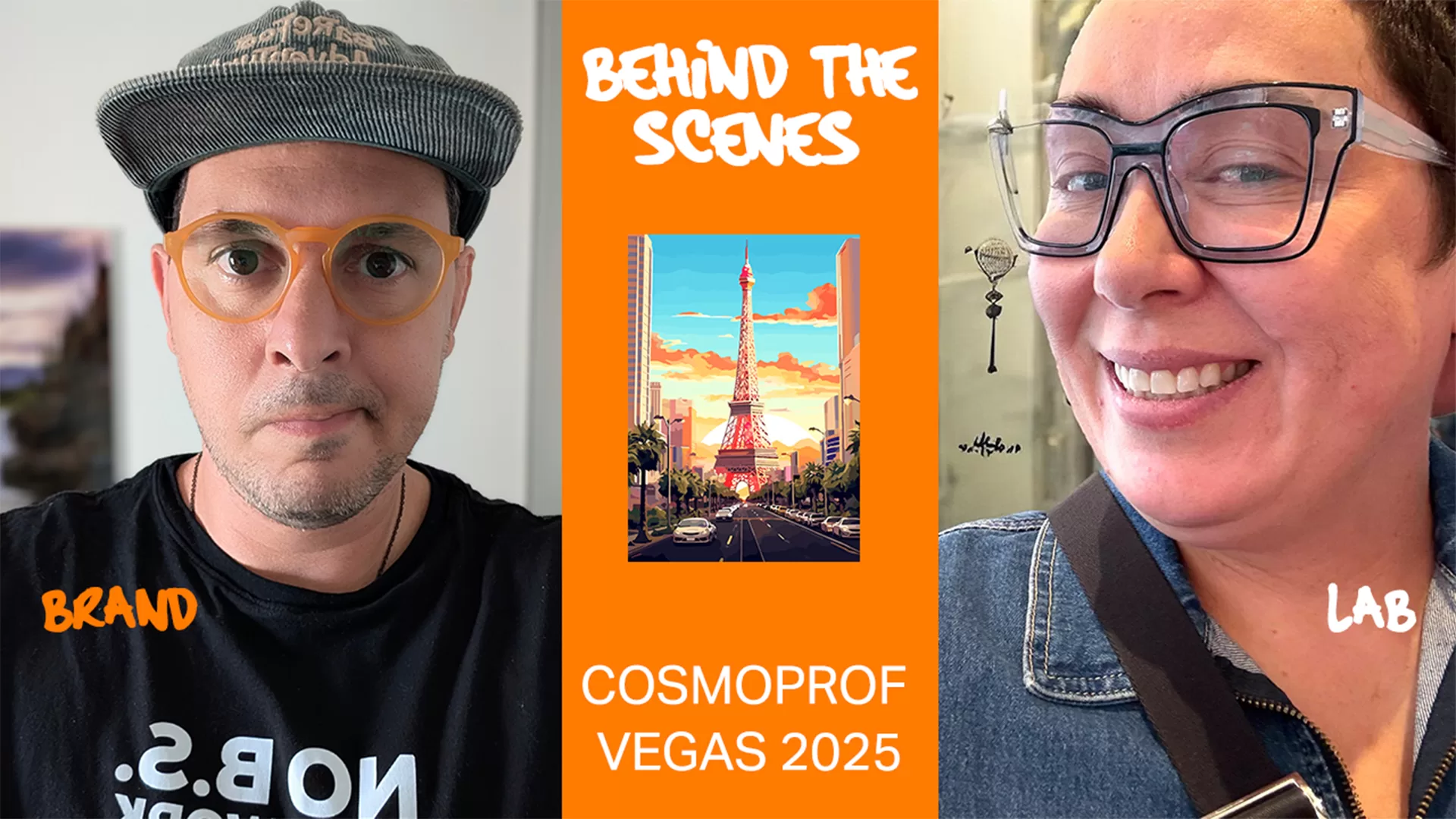
We’re just one month away from CosmoProf Las Vegas (July 14-17), and I’m incredibly excited about showcasing our integrative design approach to beauty product development. For those who might catch my occasional slip-ups calling it “in cosmetic” – that’s the French show! We’re heading to Las Vegas for North America’s largest beauty trade show with something that represents the evolution of Atomic Pom Labs under Annie’s leadership through integrative design methodology.
Strategic Design Partnership: Integrative Design Across Borders
Working with Annie, founder and lead cosmetic formulator of Atomic Pom Labs, has been the perfect opportunity to showcase how integrative design for branding creation seamlessly merges with integrative design for product formulation. As founder of The DSGN Lab in Brazil, this cross-continental collaboration demonstrates truly integrated development that bridges our expertise across borders through strategic integrative design principles.
Atomic Pom Labs’ Evolution: From Private Label to Integrative Design
Annie’s journey with Atomic Pom Labs began by addressing a real industry pain point – small batches manufacturing. As she explained: “My friends that own clinics or estheticians always complain about these large buy-ins… why can’t I just get 30 of something?” Initially, she focused on private label solutions for these friends, creating small batches of 30 units to meet their needs.
However, Annie quickly realized this approach had limitations. “To be honest, it’s the most time consuming thing and it’s like for my friends right – I can’t do it for the world,” she shared. The model wasn’t easily scalable, and Annie discovered her true passion lay in integrative design: “The formulating, branding and producing is a better focus for us and quite honestly more of an interest for me too.”
This strategic shift from small-batch private label toward complete product and concept development through integrative design became our launching pad for this showcase product launch.
Redefining the Brief: CosmoProf as Integrative Design Canvas
We are facing CosmoProf not just a trade show — but our canvas. This tradeshow offers the perfect stage to demonstrate how our new approach to brand creation and product formulation can drive real disruption in the beauty industry. This is more than an appearance; it is our opportunity to show what happens when scientific excellence in formulation meets the power of strategic design thinking.
By bringing together two distinct yet complementary perspectives — Annie as the formulator and myself as the Creative Director — we are creating a foundation that’s not only innovative but built to spark meaningful change.

What is Integrative Design in Beauty Product Development?
Integrative design is a holistic methodology where formulation science, brand strategy, and market research inform each other simultaneously rather than sequentially. Unlike traditional product development where design is applied to finished formulas, integrative design creates products where every element – from molecular structure to packaging aesthetics – emerges from a unified vision.
Why Integrative Design Matters?
Traditional beauty product development follows a linear path: formulate first, then design around the formula, finally create marketing stories to fit. This approach often results in products where the brand story feels forced or disconnected from the actual product performance.
Atomic Pom Labs approach solves this by:
- Creating authentic brand narratives that emerge from market observation and global trends itself
- Eliminating the “forced fit” problem where marketing claims don’t match product reality
- Reducing development time through simultaneous rather than sequential work
- Ensuring market relevance through research-driven decision making at every stage
The Benefits of This Approach
Brands:
- More authentic products that tell genuine stories
- Faster time-to-market through parallel development
- Better market positioning based on actual product differentiators
- Reduced revision cycles and development costs
Consumers:
- Products that deliver on their brand promises
- More innovative solutions that address real needs
- Cohesive brand experiences from packaging to performance
Industry:
- Elevated standards for product authenticity
- More meaningful innovation beyond surface-level trends
- Better collaboration between technical and creative teams
When to Use Integrative Design
Ideal scenarios:
- Launching new product categories or groundbreaking innovations
- When brand differentiation is crucial in saturated markets
- For premium products where authenticity justifies higher price points
- When targeting educated consumers who research ingredients and claims
- For brands building long-term credibility rather than quick market entry
When to pass:
- Fast-follower products copying existing successful formulas
- Extremely price-sensitive markets where cost trumps innovation
- Simple line extensions where brand equity is already established
- When working with very tight budgets that can’t support comprehensive research
- For temporary or seasonal products with short market life
Best Examples of Integrative Design in Action
Our CosmoProf Project: Three products where Annie’s formulation expertise and my brand strategy emerged simultaneously from market research, creating products where the science tells the brand story rather than marketing creating claims around existing formulas.
Industry Examples:
- Drunk Elephant: Their ingredient-focused branding emerges directly from their formulation philosophy
- The Ordinary: Product names and packaging reflect actual active ingredients and concentrations
- Glossier: Brand aesthetic and product textures developed together to create cohesive “no-makeup makeup” experience
How to Start Your Integrative Design Process: A Step-by-Step Guide
Ready to implement integrative design in your next beauty product? Here’s the framework we use:
Phase 1: Intelligence Gathering (Weeks 1-2)
Market Research:
- Identify your target demographic’s actual needs (not assumed needs)
- Analyze competitor gaps in both formulation and positioning
- Research emerging ingredients and their authentic benefits
- Map consumer language around problems you want to solve
Questions to Answer:
- What problem are we solving that others aren’t?
- What ingredients genuinely address this problem?
- How does our target market currently talk about this issue?
Phase 2: Parallel Conceptualization (Weeks 3-4)
Simultaneous Work Streams:
- Formulation Team: Begin ingredient research based on identified needs
- Brand Team: Develop visual concepts that reflect the science story
- Both Teams: Weekly alignment sessions to ensure cohesion
Key Deliverable: A concept where you can explain both the formulation rationale AND brand positioning in one coherent story.
Phase 3: Integrated Development (Weeks 5-12)
Synchronized Creation:
- Formulation testing with immediate brand story validation
- Packaging concepts that reflect ingredient benefits
- Claims development based on actual product performance
- Name development that connects science to consumer language
Critical Success Factor: Both teams make decisions together, not sequentially.
Phase 4: Market Validation (Weeks 13-14)
Unified Testing:
- Test both product performance AND brand resonance
- Validate that your brand story matches consumer experience
- Ensure formulation delivers on brand promises
Common Pitfalls to Avoid
- Starting with predetermined conclusions (formula OR brand)
- Working in silos then trying to connect later
- Skipping market research in favor of personal preferences
- Compromising science for aesthetics or vice versa
- Rushing the alignment process between teams
Tools You’ll Need
- Shared project management system for real-time collaboration
- Regular cross-team meetings (minimum weekly)
- Market research budget for authentic consumer insights
- Flexible timeline that allows for iterative development
- Decision-making framework for when formulation and brand conflict
Red Flags: When Your Process Isn’t Truly Integrative
- Brand team learns about ingredients after formulation is complete
- Formulation team doesn’t understand the brand positioning
- Marketing claims are created separately from product development
- Packaging is designed without knowing the formulation story
- Consumer research happens only after development is finished
Want to see integrative design in action? Meet us at CosmoProf Las Vegas July 14-17 where we’ll showcase products created using this exact process.
Our Multi-Dimensional Approach

Intelligence-Driven Integrative Design Development
We began with what Annie playfully called our “James Bond investigative work” — in-depth market research that served as the backbone of both our creative and formulation processes. This intelligence guided Annie’s vision for product development and fueled my strategic design solutions, allowing us to co-create a product line that is both innovative and insight-driven.
Synchronized Creative Development Through Integrative Design
Unlike traditional workflows, Annie and I are working simultaneously on formulation and design using integrative design methodology. As she explained: “The difference with us is we can work together to do it both at the same time, and that is such a good way to solidify claims to tie the story and branding into the product instead of making it all fit after.”
This collaborative approach exemplifies Atomic Pom Labs’ new positioning – where formulation science and creative strategy inform each other from day one through integrated development and comprehensive integrative design processes.
Cross-Continental Integrative Design Collaboration
Managing this project between Annie’s lab in Canada and my studio at The DSGN Lab in Brazil has been an exciting challenge in integrative design coordination. Together, we’re developing three distinct products, each tailored to a specific demographic. Every formulation not only reflects a unique facet of our combined capabilities but also opens new territory for brand identity development.
What This Integrative Design Showcase Represents
Complete Concept Development
From market research to formulation to brand story — all guided by integrative design methodology.
We don’t just respond to briefs — we create them. Our process starts with deep consumer and market insights, guiding every formulation and design decision. The result is a fully formed brand concept built from the ground up, rooted in strategy, creativity, and science.
Integrated Development
How international creative partnerships elevate product innovation through diverse perspectives.
By bridging Annie’s scientific lens in Canada with my strategic design leadership in Brazil, we unlock richer, more innovative outcomes. Our geographic and disciplinary distance becomes a strength — fostering ideas that are bold, fresh, and globally relevant.
Beyond Private Label
Revealing what’s truly possible when scientific excellence meets strategic creative thinking.
This isn’t just about putting your label on a bottle. We show brands how to lead, not follow — building products and identities that are original, ownable, and designed to last.
Full-Service Innovation
Turning “we have this budget and these people in mind” into disruptive product lines.
Annie’s vision — and Atomic Pom Labs’ strength — is in building something extraordinary from a single prompt. We translate intent into innovation, crafting products and brand narratives that are both emotionally resonant and scientifically precise.
The Vegas Debut: Showcasing Our New Approach
The next month is crucial – finalizing our design concepts, completing Annie’s formulations, coordinating packaging designs, and preparing our showcase materials through integrative design processes. This isn’t just a product launch; it’s a demonstration of Atomic Pom Labs’ evolution from private label to complete product and concept development using integrative design for branding creation and product formulation.
The Bigger Vision: Integrative Design for Beauty Industry Transformation
This project represents what Annie is building at Atomic Pom Labs: when brands need complete product development – from market research through formulation to final brand identity – they can work with us to create something extraordinary using integrative design methodology. As signed collaborators, Annie and I represent the perfect fusion of her scientific leadership and my integrative design strategy.
As Annie put it: “We’re taking their vision and our expertise… we really want to get it right.” This project shows how that philosophy works in practice through comprehensive integrative design approaches.
Connect with Us in Vegas: Experience Integrative Design Live
You’ll find Annie and me at CosmoProf Las Vegas from July 14-17. Download the CosmoProf app to book meetings – we’d love to show you how Atomic Pom Labs’ new approach to integrated product development through integrative design for branding creation and integrative design for product formulation can work for your brand.
This project has been months in the making using integrative design principles, and as I told Annie: “We are on the cusp of creating something awesome.” When you see our Vegas showcase, you’ll understand how Annie’s vision for Atomic Pom Labs can transform beauty product development through comprehensive integrative design methodology.
This is the first in a series documenting how we brought this multi-dimensional project to life under Annie’s leadership at Atomic Pom Labs using integrative design. Stay tuned to see how their evolution from private label to complete product development through integrative design for branding creation and integrative design for product formulation is changing the game.